Review: Burn My Dowry at the Start? The Marquis Manor’s Stepmother Takes the Kids Farming (Completed Translation)
Rating: 7.8 / 10
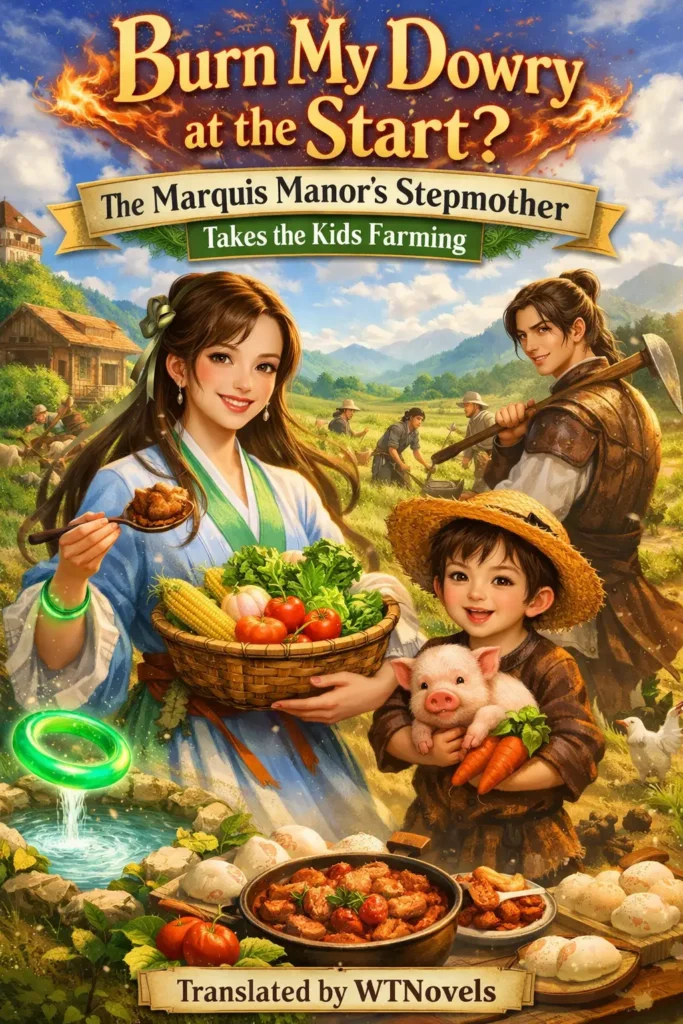
Burn My Dowry at the Start? The Marquis Manor’s Stepmother Takes the Kids Farming is a transmigration farming novel that starts extremely strong with a satisfying mix of family drama, rural development, and a competent female lead. However, while the early arcs are engaging and tightly written, the story gradually shifts tone and loses some of its original focus as it progresses.
Story Overview
Jiang Suisui dies from overwork in modern society and wakes up inside the body of a neglected marquis manor wife with a terrible reputation and an even worse family situation.
On her first day in this new life, her dowry is burned by her troublesome stepson, and the household treats her as disposable. Instead of reacting emotionally or seeking revenge within the manor, she makes a decisive choice: she leaves the capital situation behind and moves to the countryside estate.
There, she begins rebuilding her life from scratch, using farming, resource management, and practical intelligence to create stability for herself and the child she brings with her.
What starts as survival gradually turns into rural prosperity, with land development, economic improvement, and the transformation of a chaotic child into a more responsible heir.
Strengths of the Novel
One of the strongest aspects of this novel is the female lead. Jiang Suisui is calm, practical, and emotionally steady. She does not waste time on unnecessary internal conflict or prolonged revenge arcs. Instead, she focuses on action and long-term stability, which makes her very refreshing compared to typical trope-heavy protagonists.
The early farming and countryside development arc is also very engaging. The story does a good job of showing gradual improvement through agriculture, estate management, and small-scale economic expansion. This section gives a satisfying “from nothing to stability” progression that feels grounded and rewarding.
Another highlight is the child-raising dynamic. The stepson begins as a difficult and chaotic presence, but his gradual development into a more capable and emotionally connected character adds both humor and warmth to the story.
The early noble household conflict also provides enough tension and face-slapping moments to keep the opening arcs engaging without becoming overly repetitive or exaggerated.
Weaknesses and Story Issues
While the beginning is strong, the story starts to lose direction in later arcs.
The most noticeable issue is tonal inconsistency. The novel begins as a grounded historical transmigration farming story, but over time, it shifts away from that focus. Some later developments feel less connected to the original premise, making the overall direction less cohesive.
The political and court-related elements, which are hinted at early on, do not receive consistent development. Instead of expanding into deeper political intrigue, these aspects become secondary or fade into the background.
There is also a gradual increase in uneven storytelling in later arcs. Certain plotlines feel stretched or less tightly structured compared to the early chapters, which reduces narrative impact.
Overall, while the story remains readable throughout, it does not maintain the same level of focus and clarity that defines its opening sections.
Final Thoughts
Burn My Dowry at the Start? The Marquis Manor’s Stepmother Takes the Kids Farming is at its best when it focuses on its core strengths: a competent female lead, farming-based progression, and family-centered growth in a rural setting.
The early arcs are genuinely enjoyable and well-paced, offering a satisfying mix of survival and development. However, readers should be aware that the story gradually shifts away from its strongest direction, especially in terms of political structure and tonal consistency.
It is still a worthwhile read for fans of transmigration farming and stepmother-style family rebuilding stories, but its strongest impact is definitely in the first half.
Final Rating: 7.8 / 10